CATCH IT
BEFORE IT RUPTURES.
A bulging disc is your spine's early warning light. Treated now, it's one of the more straightforward problems we handle. Ignored, it can progress into a full herniation — which is exactly why we encourage Bellingham patients to address it early.
What Is A Bulging Disc?
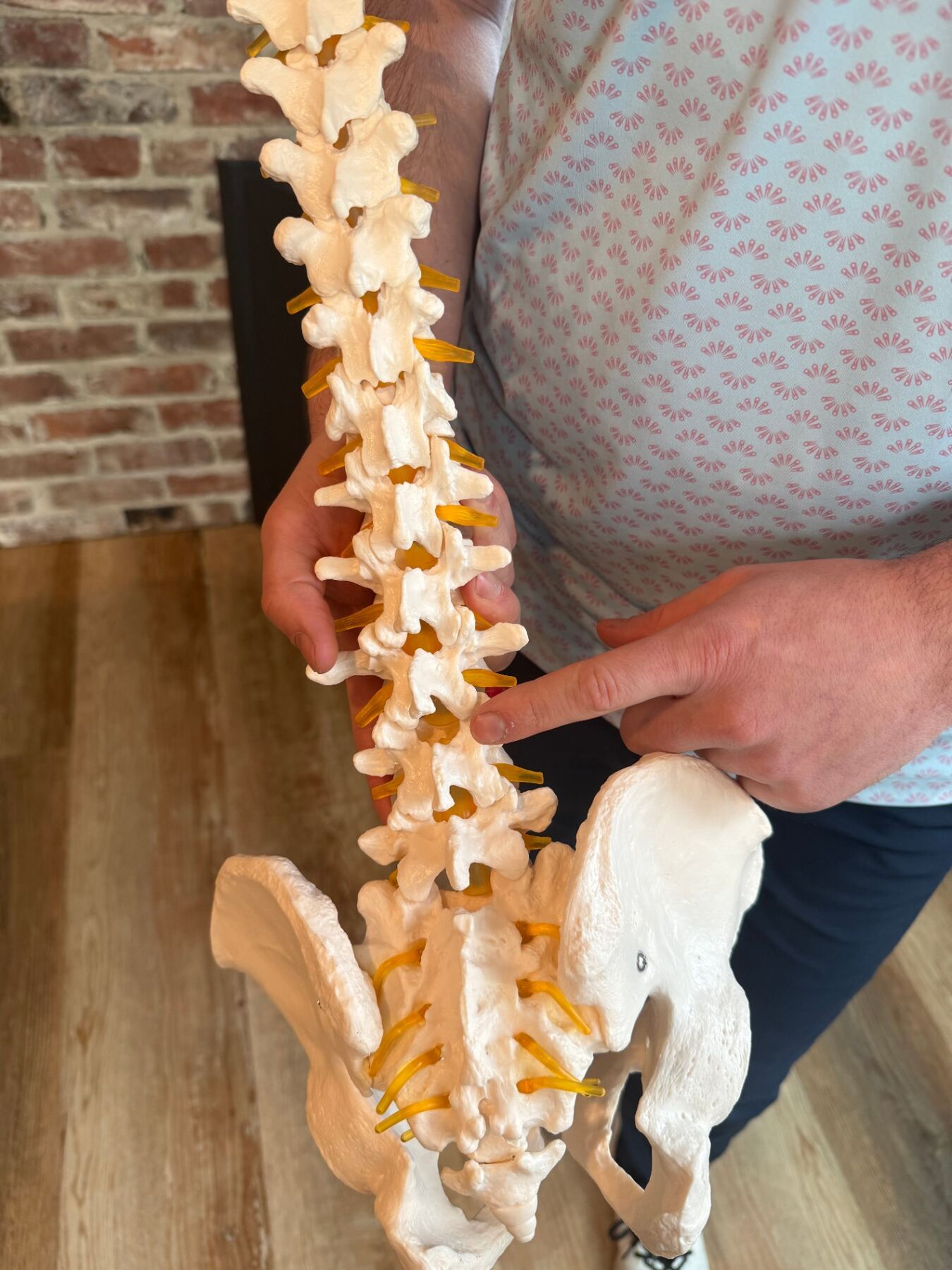
Picture a tire with a weak spot that pooches outward — the tire hasn't blown, but the bulge is a sign of trouble. A bulging disc is similar: the disc's tough outer wall stays intact, but it's weakened and protrudes beyond its normal boundary. It's typically the stage before a herniated disc, where the wall actually tears.
Bulging Disc vs. Herniated Disc
This is the question we get most. The short version:
- Bulging disc: outer wall intact, disc protrudes — usually milder, often the earlier stage
- Herniated disc: outer wall torn, inner material escapes — often more painful, more likely to pinch a nerve
Both respond well to non-surgical care. The key is catching the bulge before it becomes a herniation.
Symptoms To Watch For
- Dull ache or stiffness in the lower back or neck
- Pain that worsens with prolonged sitting or bending
- Radiating pain, numbness, or tingling if a nerve is involved
- Sometimes no symptoms at all — found incidentally on imaging
How We Treat It
- Confirm and assess the bulge with a thorough exam and imaging when needed.
- Relieve the pressure with spinal decompression.
- Reduce inflammation with laser therapy.
- Fix the cause with adjustments and postural rehab so it doesn't progress.
Don't Wait For It To Get Worse
The simplest disc to treat is the one you catch early. We help patients across Bellingham, Lynden, and Ferndale get ahead of disc problems. Start with a $47 first visit.
QUESTIONS, ANSWERED.
FIX IT
NOW.
A bulging disc is easiest to treat before it ruptures. Book your $47 first visit.