
One of the most common things we hear from women in their 40s: "Everything just started hurting, and my doctor said it's normal." Yes, some of it is hormonal. No, "normal" doesn't mean you have to live with it. Here's an honest look at what chiropractic care actually helps with during perimenopause — and where it isn't the right tool.
What's Actually Happening In Your Joints
Estrogen isn't just a reproductive hormone — it's an anti-inflammatory and a tissue-maintenance signal. When it drops (and rises, and drops again — perimenopause is chaotic, not linear), four things happen at once:
- Collagen turnover slows. Cartilage, ligaments, and tendons all rely on collagen. Slower repair means small daily stressors add up faster.
- Inflammation ramps up. Estrogen was helping quiet inflammatory signals. Without it, joints that were fine before become tender.
- Sleep breaks. Night sweats and cortisol spikes wreck the recovery window when your body was supposed to be doing repair work.
- Pain sensitivity increases. The nervous system genuinely turns the volume up on pain signals during hormone fluctuations. You're not imagining it.
What Chiropractic Care Actually Does For This
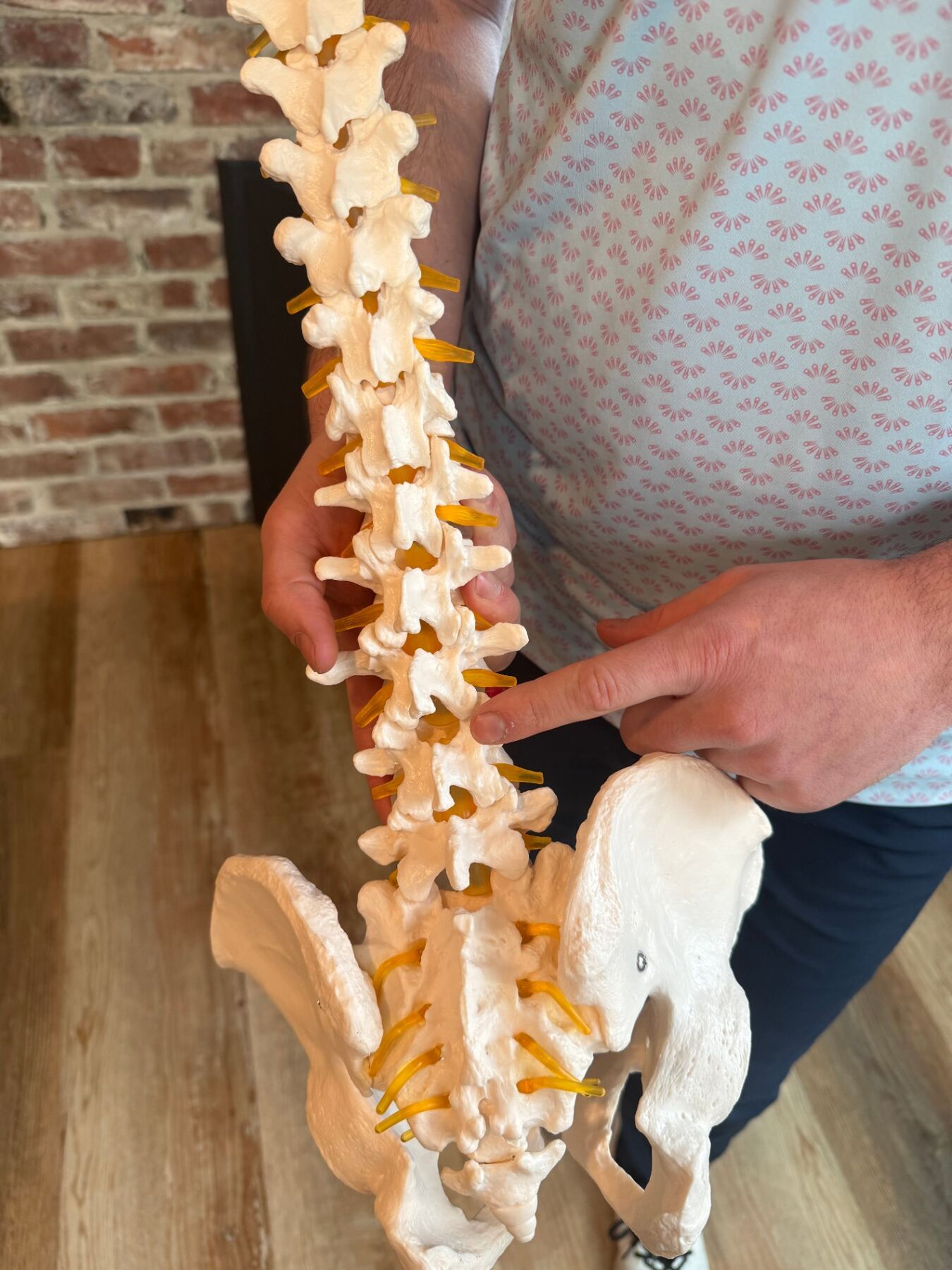
Structural care can't put your estrogen back. What it can do is address every mechanical input feeding into your joint pain — which, honestly, is a huge chunk of what women are actually feeling.
- Reduces joint load. If your pelvis is unlevel or your lumbar curve is flat, some joints are carrying way more weight than others. Correcting that immediately drops the pain in the overloaded joints.
- Restores range of motion. Stiff joints get inflamed. Moving them well feeds them nutrients. A good adjustment does more for a stiff spine in 30 seconds than 20 minutes of stretching.
- Calms the nervous system. Spinal adjustments have a measurable parasympathetic effect — the "rest and repair" side. That's real relief for a nervous system that's been in fight-or-flight from disrupted sleep.
- Improves sleep quality. When you're not waking up at 3am with tight hips, deeper sleep does more repair work.
What Chiropractic Care Does Not Do
Being honest matters here.
- It doesn't replace HRT if that's the right call for you — talk to your primary care physician or a menopause specialist. We refer out constantly.
- It doesn't rebuild the muscle mass you're losing. That requires resistance training. We'll show you where to start, but the reps are yours.
- It doesn't fix nutrition-driven inflammation. Protein intake, magnesium, omega-3s — those are food and supplement issues, not spinal ones.
The Combination That Actually Works
The women we see get the best results when they treat perimenopausal pain as a multi-front issue: structural care to fix the mechanical piece, strength training twice a week (even 20 minutes), sleep protected fiercely, and a conversation with a good primary care doc about hormones. No single one of those does the whole job. Together they change everything.
If you're in your 40s in Bellingham, Ferndale, or Lynden and you've been quietly logging joint pain for months — you're allowed to stop pushing through. An exam takes 45 minutes and tells you exactly what's mechanical vs. what needs a different provider.