You bent down to buckle a car seat and something twinged. Or you woke up with a headache that started at the base of your skull. Or the top of your shoulders has been quietly on fire for a year. Welcome to what we informally call mom-neck — and it's one of the single most common patterns we see in our 30s–50s female patients.
How Ten Years Of Little Humans Rewires Your Neck
Individually, nothing you did was dramatic. Cumulatively, it's a lot.
- Nursing / feeding posture. Hundreds of hours of forward head flexion, chin tucked to chest, shoulders rolled in — often on the same side.
- Hip carrying. Kids ride the dominant hip. Your pelvis shifts, your lumbar spine sidebends, and your neck compensates to keep your eyes level.
- Car seat + stroller lifts. Awkward, twisted, out-in-front lifts done a dozen times a day — often while sleep-deprived, so form is terrible.
- Sleeping in weird positions. Half the night in a rocking chair, the other half braced around a small human. Recovery time: none.
- Phone posture. The endless scroll while nursing/soothing/waiting adds hours of forward-head load per week.
The Symptoms You've Been Ignoring
Any of these should get your attention:
- Stiffness at the base of the skull, especially first thing in the morning
- Tension headaches that start at the back of the neck and wrap forward to the temples or behind the eyes
- Burning across the top of the shoulders — the "coat hanger" pattern
- A crunchy, grinding sensation when you turn your head
- Numbness or tingling into the hands, especially at night
- One shoulder that sits visibly higher than the other in photos
None of these are things to power through. All of them are treatable.
Why "Just Stretch" Doesn't Fix It
Because the underlying problem isn't tight muscles — it's a spine that's been chronically loaded off-center. The muscles are tight because they're doing structural work they weren't designed for. Stretch them and they clamp back down by lunch. You have to fix what they're compensating for.
What Actually Works
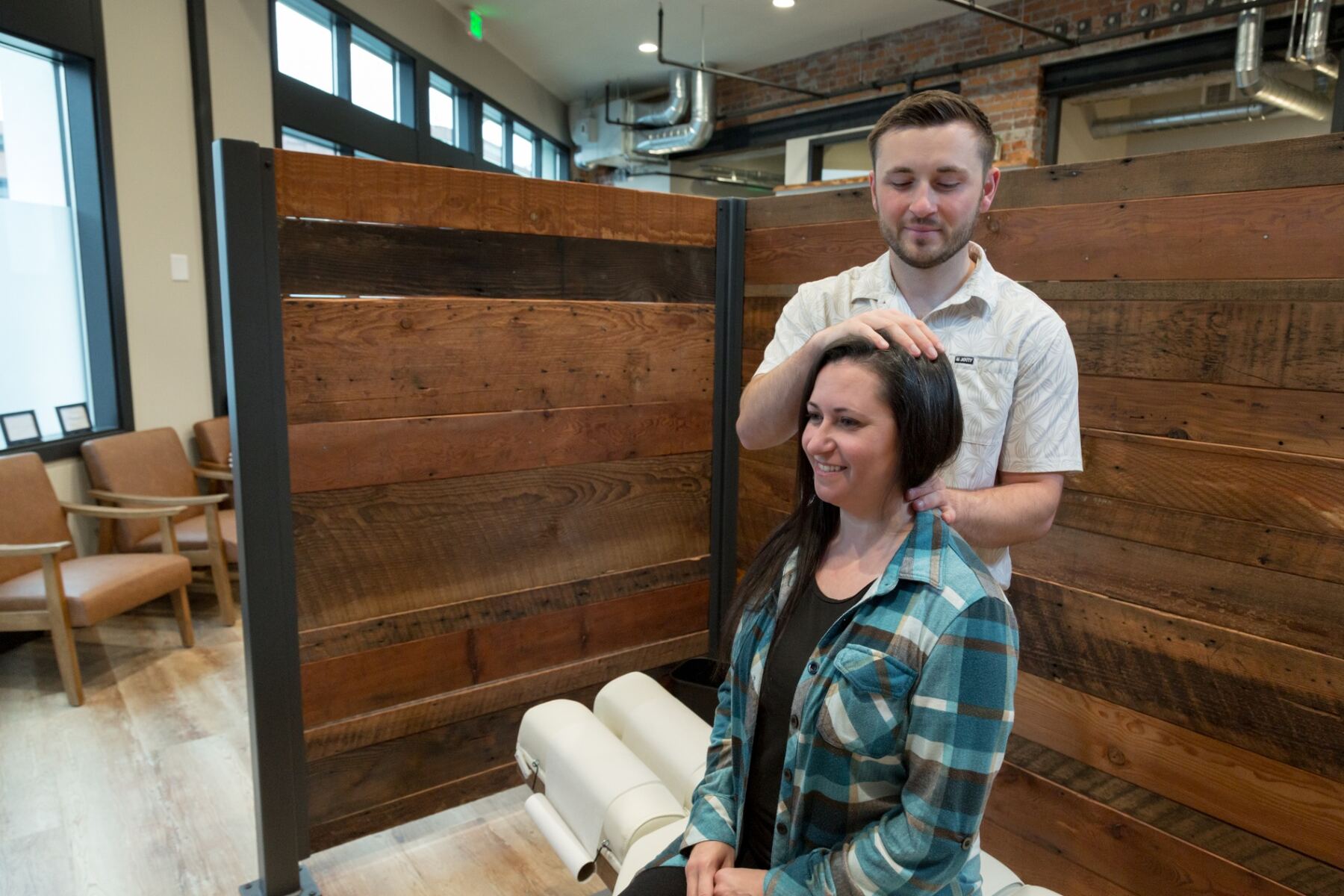
- Get an exam that includes posture imaging. Not just "does it hurt when I press here" — an actual look at the curve of your cervical spine and how level your shoulders sit. Chiropractic Biophysics is specifically built for this.
- Structural adjustments to restore the cervical curve. A neck should have a gentle forward C-curve. Most moms we see have lost most or all of theirs. Restoring it is what makes the pain stop coming back.
- Two habit swaps that punch above their weight: switch hips when carrying (yes, even though it feels wrong on the non-dominant side), and keep your phone at eye level when you're sitting with a baby.
- Five minutes of chin-tucks per day. The single highest-ROI exercise for mom-neck. We'll show you the exact form on your first visit.
If you're a mom in Bellingham, Ferndale, or Lynden and you've been quietly running the mom-neck play for years: this is the visit you've been putting off. A first evaluation takes 45 minutes and tells you exactly what needs to change.