
FEWER MIGRAINES.
MORE LIFE.
A migraine isn't "just a bad headache." It can erase a day — the throbbing, the nausea, the need for a dark, silent room. If migraines are running your calendar, there's an under-recognized contributor worth addressing: your neck. At Envision Chiropractic in Bellingham, we help migraine sufferers reduce how often and how hard they hit.
Migraine, Or Something Else?
Migraines have a distinct signature compared to tension headaches:
- Often one-sided, throbbing or pulsing pain
- Moderate to severe — frequently disabling
- Nausea or vomiting
- Sensitivity to light, sound, or smells
- Sometimes preceded by visual aura
- Worsened by routine activity
The Neck Connection Most People Miss
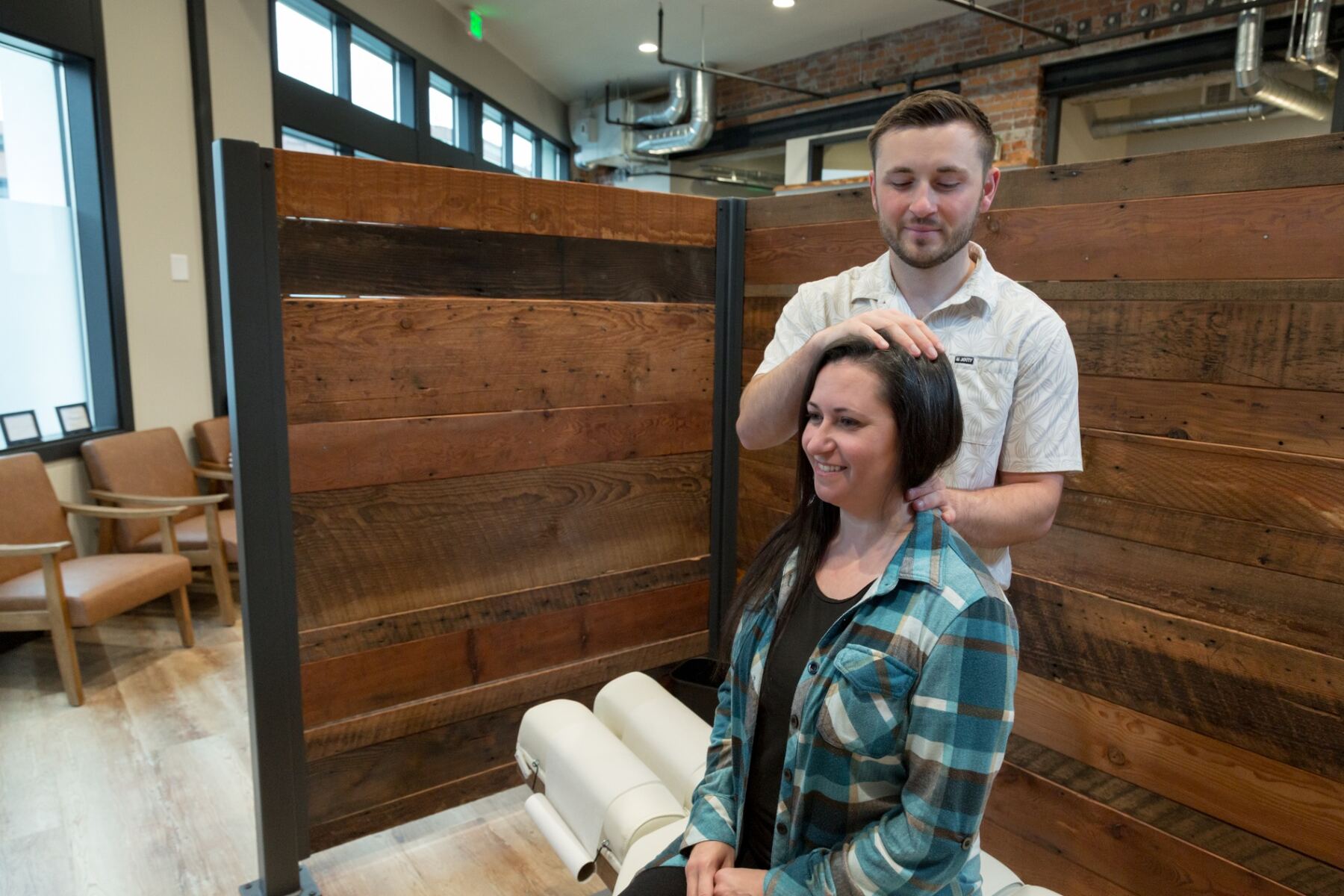
Migraine is complex and multifactorial — but for a large share of sufferers, the upper neck is a powerful, treatable trigger. The nerves of the upper cervical spine feed into the same system that drives migraine pain. When those segments are restricted or irritated, they can lower your threshold for attacks. Address the neck, and many people find their migraines become less frequent and less intense.
Our Drug-Free Approach
- Map your pattern. We look at your triggers, your history, and your neck to understand what's feeding your migraines.
- Treat the cervical drivers. Gentle upper-cervical adjustments and soft-tissue work reduce a key trigger.
- Calm and support. Laser therapy and postural rehab lower the overall load on your system.
Note: we work alongside your medical care, not in place of it. Any medication changes should be made with your prescribing physician.
Get Your Days Back
You shouldn't have to forfeit a day every time a migraine decides to show up. We help migraine patients from Bellingham, Lynden, and Ferndale. Start with a $47 first visit.
QUESTIONS, ANSWERED.
BEAT
THE NEXT
MIGRAINE.
Target the neck triggers behind your attacks. Book your $47 first visit.