
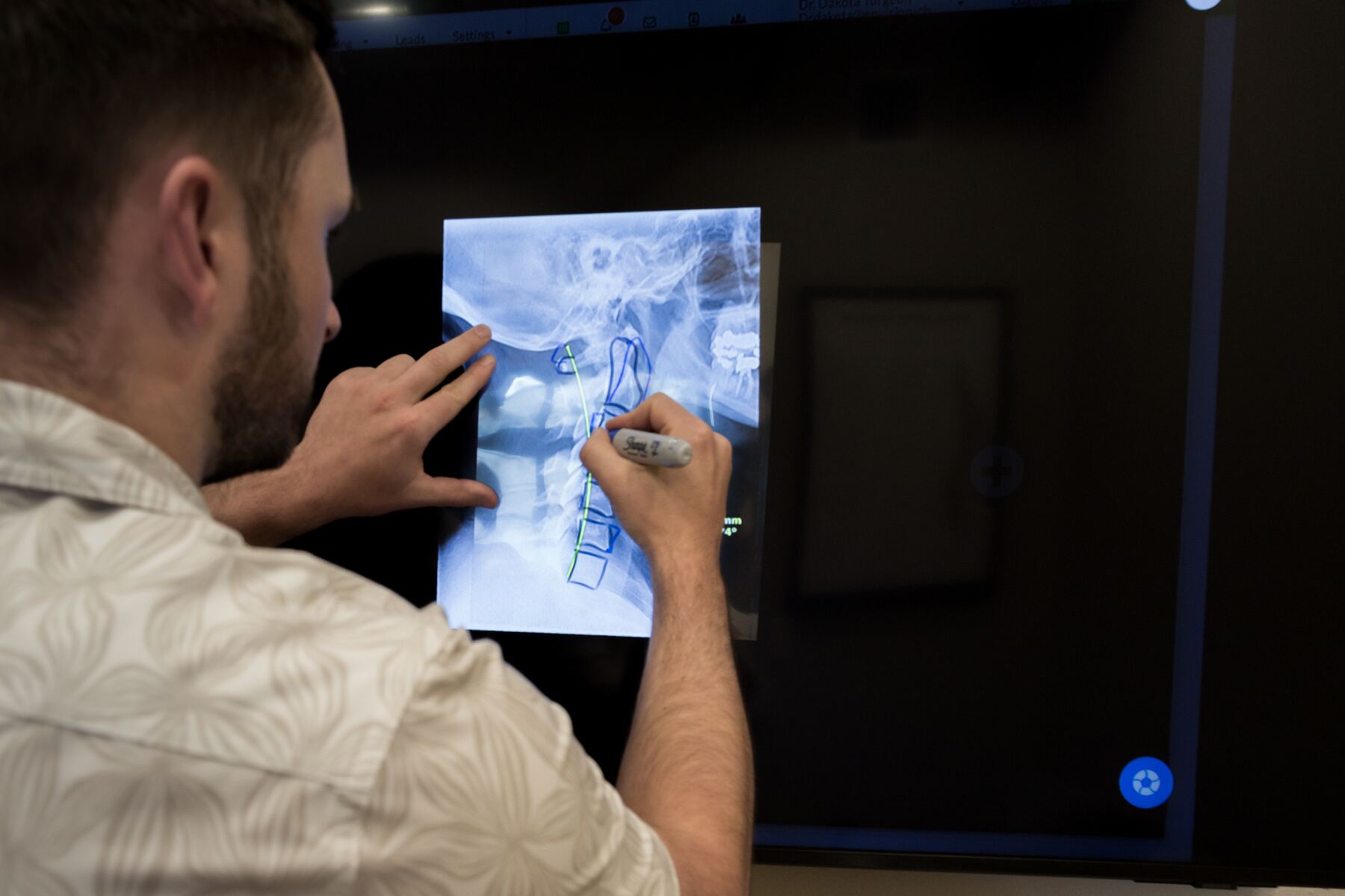
If you have seen the term CBP while comparing chiropractors, the useful question is not simply whether an office offers adjustments. It is how the doctor measures your starting point, chooses techniques, and checks whether the plan should change.
CBP in One Paragraph
Chiropractic BioPhysics, or CBP, is a corrective chiropractic approach that combines posture and spinal-alignment assessment with adjustments, mirror-image exercises, and traction. It commonly uses X-ray measurements when clinically appropriate to describe spinal curves and alignment, establish a starting point, and guide re-evaluation. The goal is structural correction rather than focusing only on how a symptom feels on one day.
At Envision Chiropractic, Dr. Dakota uses CBP-style techniques, including X-ray markups when indicated, denneroll traction, body weighting, and corrective exercises. He is not CBP-certified, and this article does not imply certification. Recommendations follow an individual examination rather than a standard protocol for every patient.
How CBP Differs From Traditional Chiropractic
“Traditional chiropractic” covers many styles, so this table is a broad comparison rather than a description of every office. A symptom-focused visit and a corrective plan are not mutually exclusive; a chiropractor may discuss immediate comfort and longer-term structural goals in the same plan.
| Feature | Symptom-focused chiropractic | CBP-style corrective care |
|---|---|---|
| Goal | Relief and improved movement | Structural correction alongside symptom and movement goals |
| Measurement | Symptoms and physical examination | Posture analysis and X-ray measurements when indicated |
| Tools | Adjustments and related manual care | Adjustments plus mirror-image exercises and traction |
| Re-evaluation | As needed based on symptoms and exam | Scheduled re-exams and imaging when clinically appropriate |
The important distinction is the planning process. CBP-style care makes the measurements and intended structural changes explicit. It also gives you specific questions to ask: What did you find? Which technique addresses it? When will we reassess, and what will we do if the findings do not change?
Who CBP May Help
People often explore CBP-style care for posture concerns, tech neck, a reduced neck curve, or recurring back and neck pain. Those labels alone do not determine candidacy. Two people with similar symptoms can have different examination findings and different reasons to choose or avoid a technique.
A consultation helps place your concern in context: work demands, prior injuries, daily posture, health history, and what you want to return to doing. An exam may include posture assessment and orthopedic or neurological tests. X-rays are recommended only if needed for the clinical picture.
No outcome is guaranteed, and CBP-style care is not presented as a cure. If your symptoms or examination suggest that another provider should evaluate you, referral is the appropriate next step.
What a CBP Care Plan Looks Like at Envision
- Consultation and examination. Day 1 focuses on your history, concerns, and objective findings, with X-rays if needed.
- Report of findings. On Day 2, Dr. Dakota explains the results and proposed care plan in plain language.
- Corrective phase. When appropriate, recommendations may combine adjustments, mirror-image exercises, body weighting, and denneroll or other traction.
- Re-examination. Scheduled reviews compare your current findings with the starting point and help guide the next decision.
You can review the CBP-style corrective care service page for the clinic-specific overview. That page is the best place to continue if you are looking for care in Bellingham; this article is intended to explain the terminology.
What the Research Says—and What It Doesn’t
The CBP Non-Profit research page collects publications and resources about Chiropractic BioPhysics. For an independent database record, a 2021 systematic review of controlled trials on cervical extension traction discusses research on cervical lordosis rehabilitation. A 2022 randomized trial also studied cervical lordosis rehabilitation in a specific group with cervical spondylotic radiculopathy.
These sources are useful for understanding the techniques being studied, but they do not establish that every patient needs traction or will experience the same result. Study populations, comparison treatments, measurements, and protocols matter. Bring questions about the evidence to your report of findings so the discussion stays connected to your own exam.
Questions to Ask Before Starting
Ask which findings support corrective care, why each technique is recommended, what home participation involves, and how progress will be assessed. Also ask about cost and alternatives. A careful plan should make room for your questions and for changing course when the clinical picture changes.