
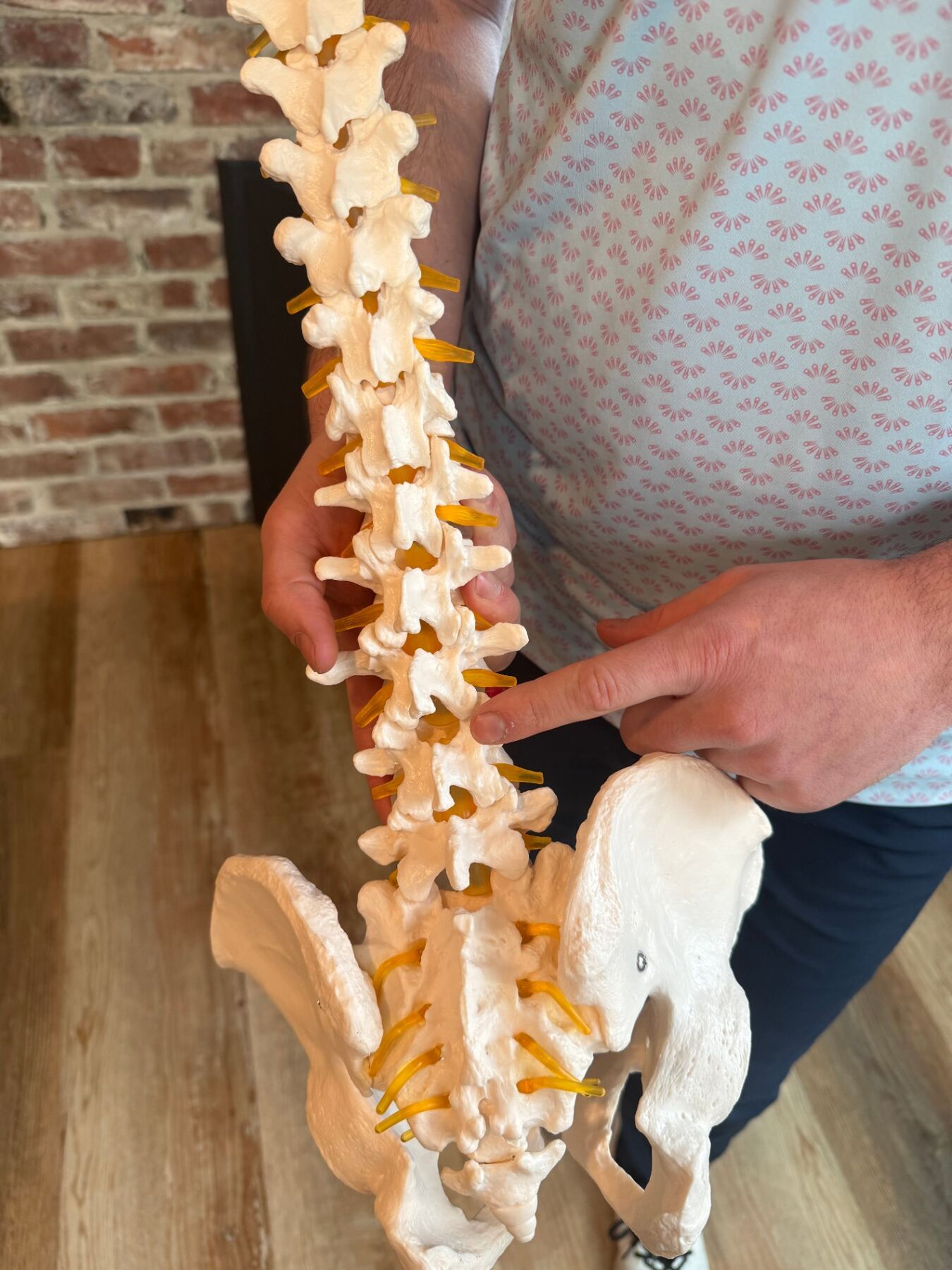
If sciatica is shooting down your leg, you've probably been told two things: "see a chiropractor" and "see a physical therapist." Both are reasonable. They're not the same. Here's an honest, plain-English comparison — from a Bellingham chiropractor who refers to PTs when it's the right call.
First, What Sciatica Actually Is
"Sciatica" isn't a diagnosis — it's a symptom. It describes pain, numbness, or tingling that travels along the sciatic nerve (low back → buttock → back of leg → sometimes the foot). The cause is usually one of three things: a disc pressing on a nerve root, a tight piriformis muscle compressing the nerve, or joint dysfunction in the lower back or pelvis. The right treatment depends entirely on which of those is driving it. (We break down the disc piece in Is Your Back Pain Actually a Disc?)
What a Chiropractor Does for Sciatica
A chiropractor focuses on the structure and motion of your spine and pelvis. For sciatica that means:
- Adjustments to restore motion in lumbar and SI joints that are locked up and irritating nearby nerves.
- Spinal decompression when imaging or symptoms point to a disc compressing the nerve root — gentle, mechanical traction that pulls pressure off the disc. More on that in our spinal decompression page.
- Soft-tissue work on the piriformis and glutes when the nerve is being squeezed in the buttock rather than the spine.
Chiropractic tends to be the faster route when the driver is mechanical: a stuck joint, a poorly loaded disc, or a misaligned pelvis. People often feel meaningful change inside the first few visits.
What a Physical Therapist Does for Sciatica
A PT focuses on movement, strength, and motor control. For sciatica that means:
- Directional preference exercises (often McKenzie-style) to "centralize" the pain back toward the spine.
- Strengthening the glutes, core, and hip stabilizers so the lower back stops doing work that other muscles should.
- Gait, posture, and movement retraining to stop re-aggravating the nerve.
PT shines when the driver is weakness, deconditioning, or a movement pattern you keep repeating — and it's essential for long-term resilience once acute pain settles down.
Side-by-Side
| Chiropractor | Physical Therapist | |
|---|---|---|
| Primary tool | Adjustments, decompression, soft-tissue work | Targeted exercise, movement retraining |
| Best for | Disc compression, joint dysfunction, fast pain relief | Weakness, poor movement patterns, long-term resilience |
| Typical pace | Often relief inside 1–3 visits | Steady progress over weeks |
| Imaging | X-ray on-site when indicated | Usually relies on outside imaging |
| Hands-on | High — passive treatment + active rehab | Lower — mostly active, you do the work |
It's rarely "chiro or PT." For most sciatica, the right answer is the right sequence.
Individual results vary from patient to patient. Testimonials reflect one person’s experience and are not a promise or guarantee of any particular outcome.
So Which One Should You See First?
A reasonable rule of thumb:
- Sharp, recent, radiating pain — especially with bending or sitting? Start with a chiropractor. Get a real exam, rule out red flags, and take pressure off the nerve. If a disc is involved, decompression usually settles it faster than exercise alone.
- Lingering weakness, recurring flares, or trouble with stairs and standing? Start with — or add — a physical therapist to rebuild the support system so it stops coming back.
- Numbness, foot drop, or loss of bowel/bladder control? That's a medical issue, not a chiro-vs-PT question. Go to urgent care or the ER.
At Envision we work alongside excellent PTs in Bellingham. When your case needs both, we'll say so — and we'll send you to one we trust.
How We Decide at Your First Visit
A $47 first visit at our downtown Bellingham office includes a full exam, orthopedic and neurological testing, and X-rays when indicated. By the end of the visit you'll know what's actually causing your sciatica, whether chiropractic care is the right starting point, and what a realistic recovery timeline looks like.