Tension headaches are the most common headache there is — that dull, squeezing pressure that builds through the day until your whole head feels like it's in a vise. The good news: they're also one of the most treatable, because the cause is usually mechanical.
What Tension Headaches Feel Like
Dull, aching pressure — often like a band tightening around the head
Tightness and tenderness in the neck, shoulders, and base of the skull
Pain on both sides, rather than one
Builds gradually, often worse later in the day or under stress
Usually not throbbing, and not dramatically worsened by movement (which helps distinguish it from migraine)
What Actually Causes Them
Despite the name, the "tension" isn't just stress — it's physical tension in the muscles and joints of your neck and upper back. The muscles at the base of your skull stay under constant load from forward head posture, long hours at a screen (tech neck), stress, and clenching. That sustained strain refers pain up into your head. Pain relievers quiet it for a few hours; they never touch the cause.
How We Fix Tension Headaches
Find the restrictions. We pinpoint the stiff, overloaded segments in your neck and upper back.
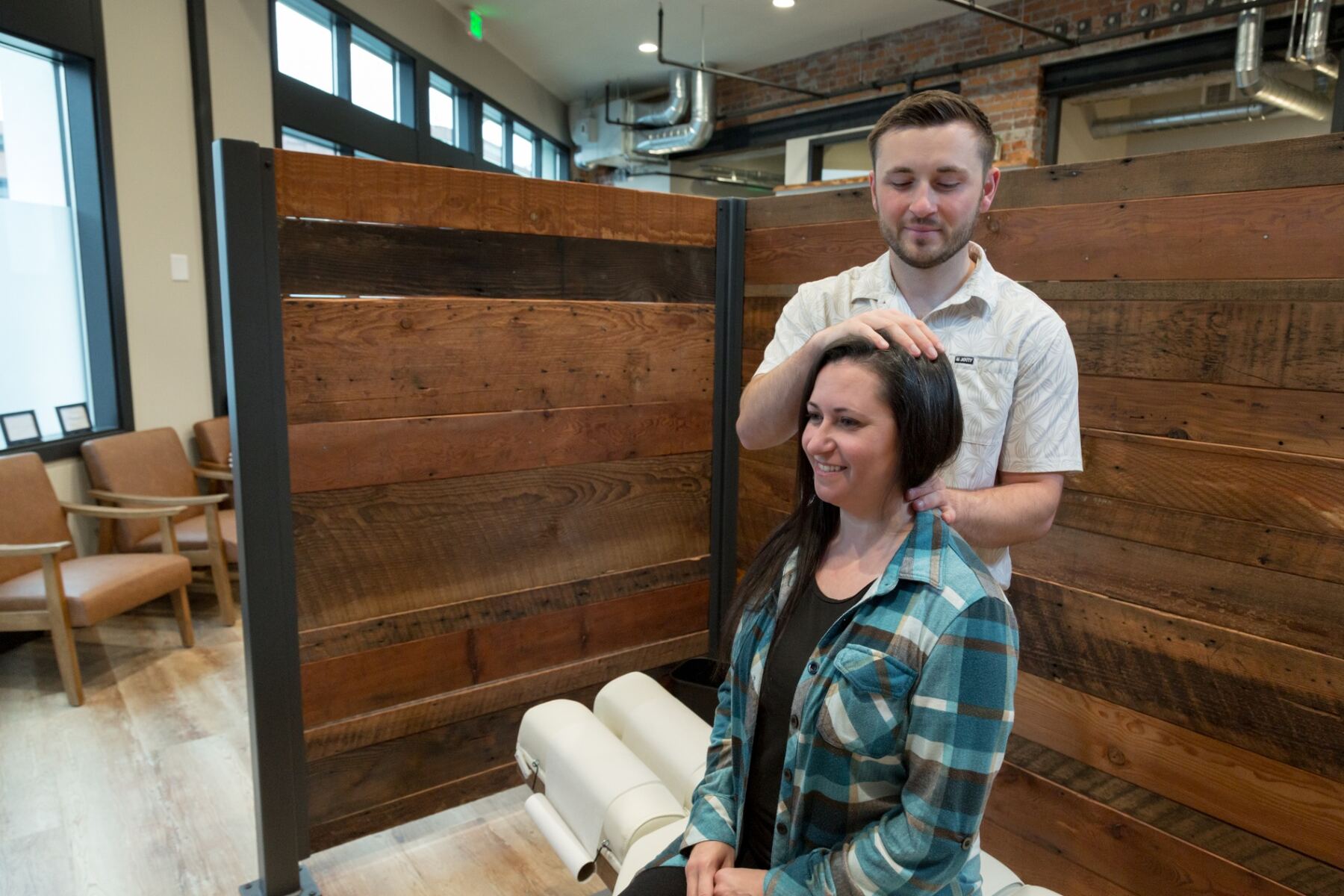
Release them. Gentle adjustments and soft-tissue work relieve the tension referring pain into your head.
Retrain posture.Postural rehab takes the chronic load off those muscles so headaches stop rebuilding.
"For the first time in a year, I could turn my head without pain... the relief was immediate."
Stop Living By The Clock Of Your Next Headache
You shouldn't have to schedule your life around when the pressure builds. We help tension-headache patients across Bellingham, Lynden, and Ferndale. Start with a $47 first visit.
Tension Headache FAQ
QUESTIONS, ANSWERED.
Tension headaches are most often driven by tightness and dysfunction in the muscles and joints of the neck and shoulders — frequently from posture, prolonged screen time, stress, and clenching. That muscular tension refers pain into the head as a dull, band-like pressure.
By addressing the actual source — tight, restricted neck and upper-back segments. Adjustments, soft-tissue work, and posture correction relieve the tension that's referring pain into your head, which often reduces both frequency and intensity.
Usually a dull, aching pressure or tightness — often described as a band squeezing around the head — along with tenderness in the scalp, neck, and shoulder muscles. Unlike migraines, they're typically not throbbing and not made dramatically worse by activity.
Very often, yes. Forward head posture and tech neck keep the muscles at the base of the skull under constant load, which is a classic driver of chronic tension headaches.
Many tension-headache patients feel relief within the first few visits as neck tension eases. Lasting change comes from also correcting the posture and mechanics behind it.