
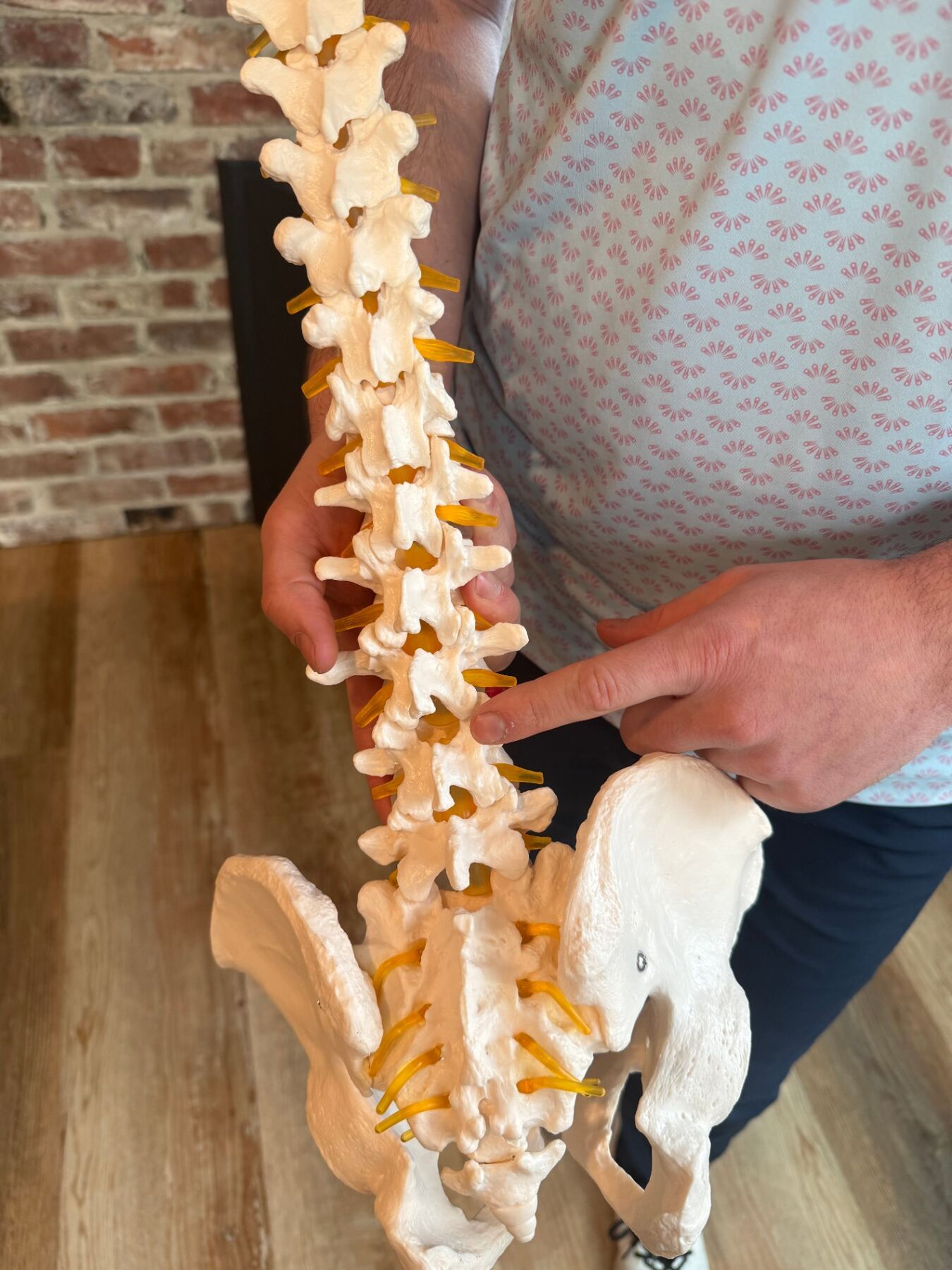
Got a disc diagnosis and not sure what it means? "Bulging" and "herniated" sound similar and often get used loosely, but they describe two different stages of a disc problem. Here's the difference — and why it matters.
The Tire Analogy
Think of a spinal disc like a tire. A bulging disc is like a tire with a weak spot pooching outward — the wall is intact, but it's protruding where it shouldn't. A herniated disc is like that wall actually cracking, letting the inner material push out through the tear.

Bulging Disc: The Earlier Stage
A bulging disc is usually the milder, earlier stage. The outer wall is still holding, so it's less likely (though not unable) to press hard on a nerve. Caught here, it's very treatable — and addressing it can prevent progression.
Herniated Disc: The Wall Tears
A herniated disc means the outer ring has torn and inner material has escaped. When that material contacts a nerve, you get the radiating pain, numbness, or weakness that disc problems are known for.
Does The Difference Change Treatment?
Both respond well to the same non-surgical toolkit — decompression, laser, adjustments, and rehab — but the severity, the timeline, and how aggressively we move can differ. That's why a real diagnosis beats guessing from the name alone.
The Bottom Line
Bulging is usually earlier and milder; herniated means the wall has torn. Either way, most don't need surgery. If you've got a disc on your mind, a $47 first visit at Envision gets you a clear answer. We help patients across Bellingham, Lynden, and Ferndale.